
About Us
Welcome to High-Tech Security Services
Hello, Welcome to High-Tech Security Services where you will learn , basic security procedures like health and safety, report and evidence writing, bombs and emergency response, Canadian legal system, legal authorities and post order. This program is specifically designed to help you pass your Ontario security guard license test which provides you great job opportunities. You can put your trust in us so the world can trust you.
What Our Clients Say
Posted on Google
 Karanjot Singh
Trustindex verifies that the original source of the review is Google.
Great experience with a company the staff is well educated, experienced too & really appreciate servicePosted on Google UMESH MEHRAGreat service, Professional Install, Quick turnaround time! Hire them for the job!!!!!!!!!!Posted on Google
 Alex ZifermanIt was easy to communicate with Team they found a solution to my problem they were on time. Did a great job very clean and priced adequately. Recommend!Posted on Google
 Arshdeep KaurBest services they are provided also value the timePosted on Google
 Home TVsukhpal and gurtej did a great job. Very helping and supportive team.Posted on Google
 onkar singhThey provided good service.Posted on Google
 Sukhpal Singh chandiI must say Sukhpal and Gurtej were very professional. They knew what they were doing and guided my throughout whole process very patiently. I cannot be more happier with the quality of cameras. I definitely recommend High-Tech Security to anyone looking for security camerasPosted on Google
 sukhpal SinghVery professional and reliable team. They came on time , did the job and delivered what promised. Totally satisfied with camera's quality as well.Posted on Google
 Raman Deep SinghI recently hiredHigh-Tech security for a full security camera installation at my property, and I couldn’t be happier with the experience. From the very first interaction, they were highly professional, punctual, and knowledgeable about the best camera options for my needs. The team arrived exactly on time, worked quickly and efficiently, and completed the entire installation much faster than I expected — without compromising on quality. They carefully explained the setup, walked me through the app and features, and made sure everything was tested and working perfectly before leaving. What impressed me most was their attention to detail — the wiring was neat and hidden, camera angles were optimized for full coverage, and they made sure the system was user-friendly. The entire process was smooth, stress-free, and very well executed. I highly recommend Manpreet and his team (Sukhpal and Lovepreet) to anyone looking for a professional, fast, and reliable security camera installation service. Special thanks to Sukhpal and Lovepreet


Frequently Asked Question
Are security guards in Canada permitted to carry firearms?
What powers of arrest do private security guards have?
In Canada, private security guards primarily operate under the same “powers of citizen’s arrest” as any other private citizen, as outlined in the Criminal Code of Canada.
Specifically, a security guard can only arrest a person if:
They witness the person committing a crime, or they reasonably believe the person is escaping from and was freshly pursued after committing an indictable (serious) offence.
They are asked to assist a peace officer (police) in making an arrest.
They apprehend someone believed to be committing an offence on the property they are protecting (such as a theft)
How much does it cost to hire a security guard in Canada
The cost is highly variable and depends on factors like location (major cities are generally more expensive), the type of service, and the guard’s experience.
Typical hourly rates for an unarmed security guard generally range from $20 to $40 per hour.
Entry-level guards in non-specialized roles might be on the lower end.
Specialized services (e.g., mobile patrols, event security, tactical guards, close protection/bodyguards) command significantly higher rates, often starting at $50 per hour and up.
Contracts for longer terms or annual agreements may receive a lower hourly rate than short-term or one-time services.
What are the licensing requirements for security guards in Canada?
Licensing for both security companies and individual security guards is regulated at the provincial or territorial level, not federally.
While requirements vary slightly, all provinces generally mandate that a security guard must:
Be at least 18 years old.
Be eligible to legally work in Canada.
Have a clean criminal record (pass a background check).
Complete a government-approved basic training course (usually 40 hours).
Pass a licensing exam (where applicable).
Hold a valid provincial or territorial security guard license (which must be carried while working).
What services do security companies in Canada typically offer?
Security companies offer a diverse range of services, which can include:
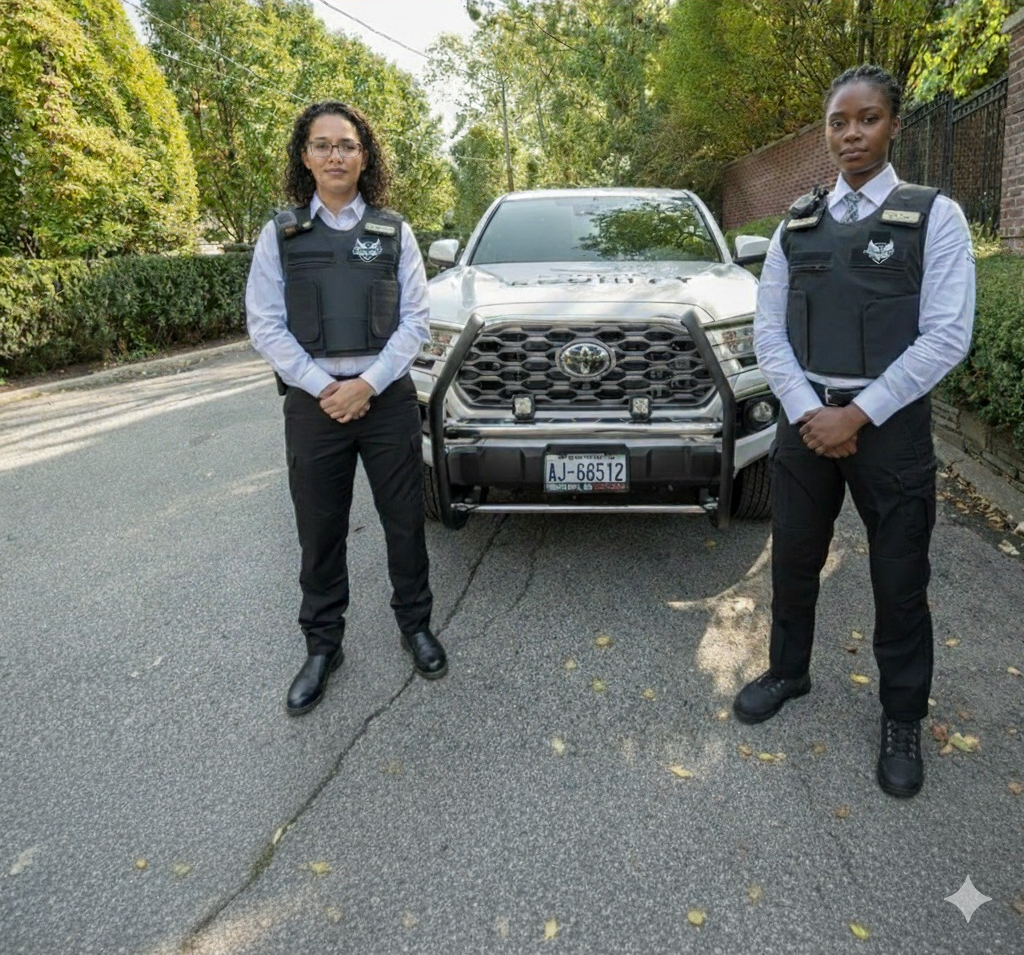
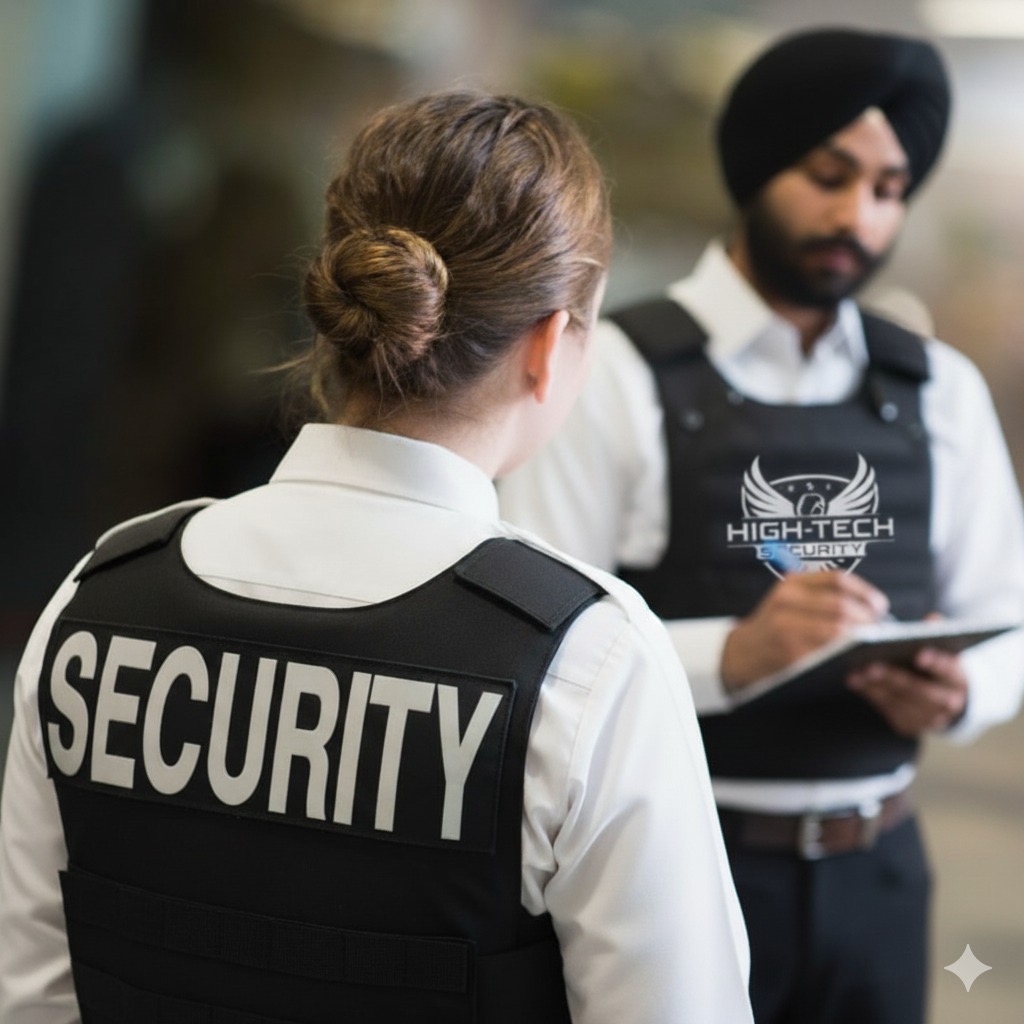
On-Site Security Guards: Uniformed or plain-clothed personnel for static guarding, patrols, access control, and front-desk/concierge duties.
Mobile Patrols: Random or scheduled vehicle patrols to check on premises, especially during off-hours, and alarm response.
Electronic Security Systems:
Installation and monitoring of CCTV (Closed-Circuit Television) surveillance, access control systems (key cards, biometrics), and intrusion detection/alarm systems.
Loss Prevention: Guards specializing in deterring theft and managing inventory shrinkage in retail or commercial environments.
Specialized Security: Services like executive protection (bodyguards), event security (crowd control, venue safety), and security consulting/risk assessment.
Are security guards in Canada permitted to carry firearms?
What powers of arrest do private security guards have?
In Canada, private security guards primarily operate under the same “powers of citizen’s arrest” as any other private citizen, as outlined in the Criminal Code of Canada.
Specifically, a security guard can only arrest a person if:
They witness the person committing a crime, or they reasonably believe the person is escaping from and was freshly pursued after committing an indictable (serious) offence.
They are asked to assist a peace officer (police) in making an arrest.
They apprehend someone believed to be committing an offence on the property they are protecting (such as a theft)
How much does it cost to hire a security guard in Canada
The cost is highly variable and depends on factors like location (major cities are generally more expensive), the type of service, and the guard’s experience.
Typical hourly rates for an unarmed security guard generally range from $20 to $40 per hour.
Entry-level guards in non-specialized roles might be on the lower end.
Specialized services (e.g., mobile patrols, event security, tactical guards, close protection/bodyguards) command significantly higher rates, often starting at $50 per hour and up.
Contracts for longer terms or annual agreements may receive a lower hourly rate than short-term or one-time services.
What are the licensing requirements for security guards in Canada?
Licensing for both security companies and individual security guards is regulated at the provincial or territorial level, not federally.
While requirements vary slightly, all provinces generally mandate that a security guard must:
Be at least 18 years old.
Be eligible to legally work in Canada.
Have a clean criminal record (pass a background check).
Complete a government-approved basic training course (usually 40 hours).
Pass a licensing exam (where applicable).
Hold a valid provincial or territorial security guard license (which must be carried while working).
What services do security companies in Canada typically offer?
Security companies offer a diverse range of services, which can include:
On-Site Security Guards: Uniformed or plain-clothed personnel for static guarding, patrols, access control, and front-desk/concierge duties.
Mobile Patrols: Random or scheduled vehicle patrols to check on premises, especially during off-hours, and alarm response.
Electronic Security Systems:
Installation and monitoring of CCTV (Closed-Circuit Television) surveillance, access control systems (key cards, biometrics), and intrusion detection/alarm systems.
Loss Prevention: Guards specializing in deterring theft and managing inventory shrinkage in retail or commercial environments.
Specialized Security: Services like executive protection (bodyguards), event security (crowd control, venue safety), and security consulting/risk assessment.